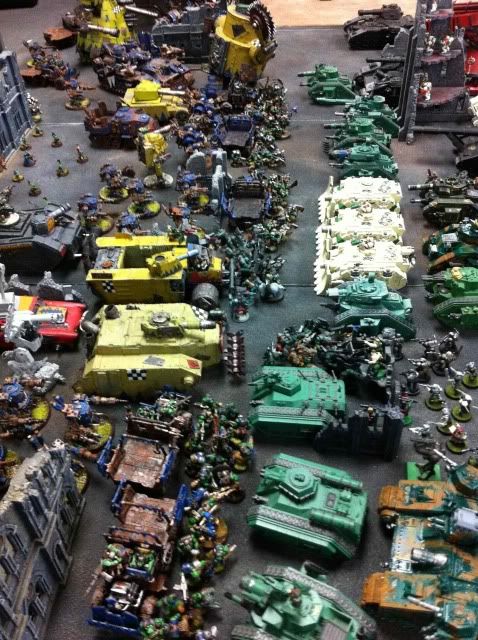
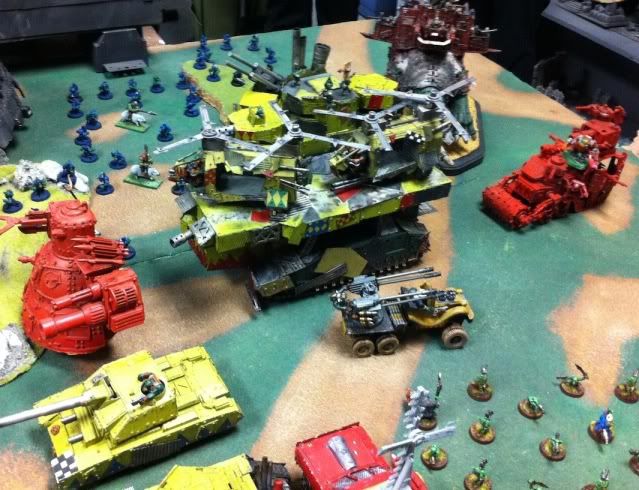
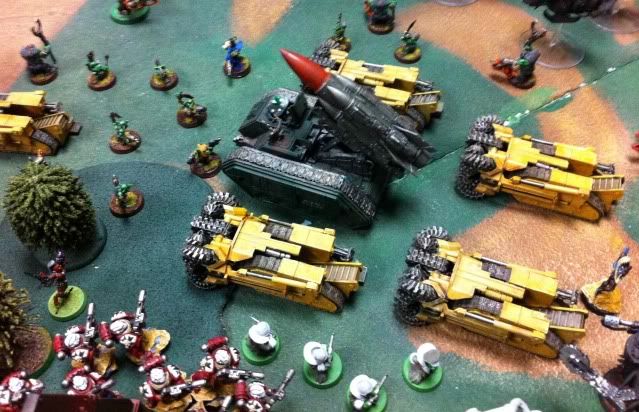
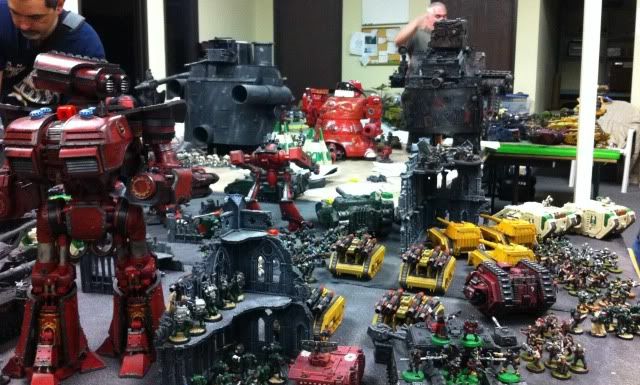
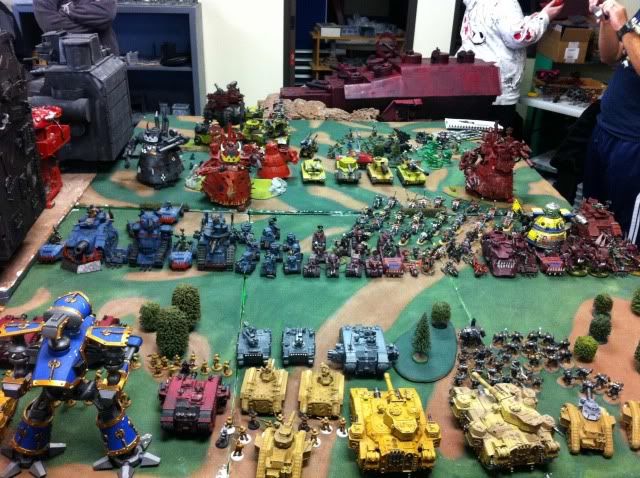
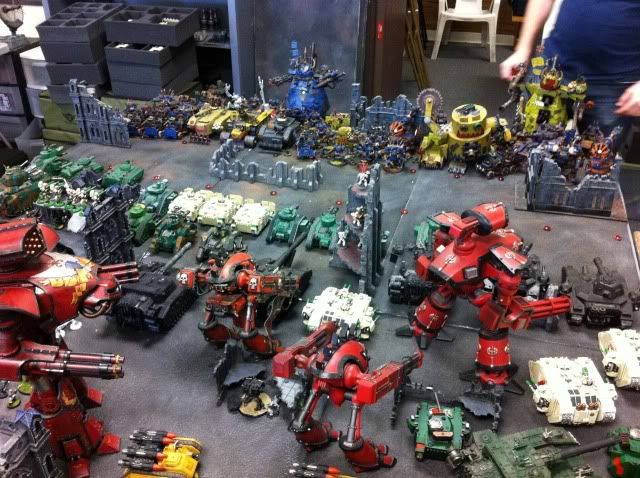
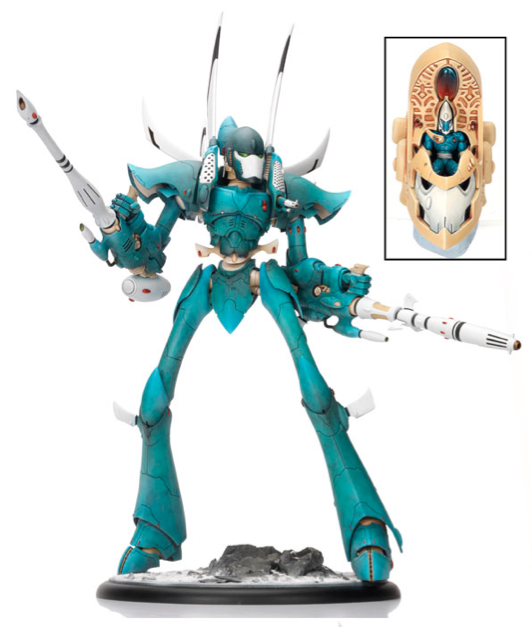
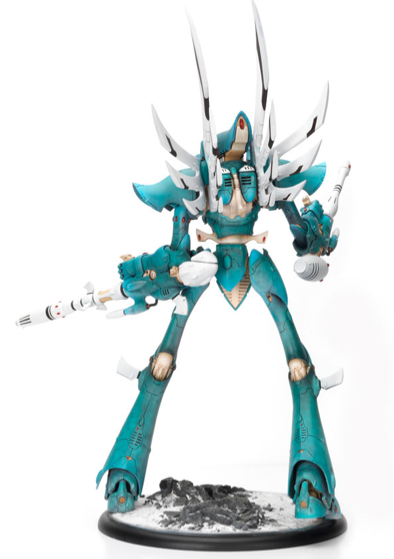
Since starting the Apocalypse40K forum, I have met a lot of great people who pioneered Apocalyptic battles before there was Apocalypse. The guys at Siegeworld are at the forefront of the mega-apocalypse insanity. And Kirk Damman was the guy who really brought it all together. Here is a conversation with Kirk.
1) How did you get into 40K?
I’d been a role-player for a lot of years in high school and into college. All sorts of games, but mostly Shadowrun. The amusing thing is that I really played them more as a games developer than as a player. I found it much more fun to write scenarios (and to GM them) than I ever found in playing in them. I’d bumped into Games Workshop as my very first role-playing book (given as a Christmas gift by an English cousin) was the “Call of Cthulu” Role-playing game that GW produced at that time.
In college I got heavily into Magic: the Gathering. However, I really loved to collect the cards more than to play the game. My first exposure to Games Workshop tabletop games was when I spent a semester abroad in England. British cousin (again) had been heavily into Blood Bowl and had a whole shelf of White Dwarf. He was away, but I spent a week with relatives where I got his room and ended up reading way too many articles from them. I particularly remember the article on Space Marine medics (and a particular piece of art where a medic provides the emperor’s peace to a poor guardsman). I loved the concept of the game system and the fluff, and even went to a local GW store (where I got a five minute intro to EPIC). However, I knew nobody that played, the painting massively intimidated me, and I continued with MtG.
In Law School, I ended up losing interest in MtG. The game was getting too competitive and the collecting aspect has simply become “buy the singles you need.” I was therefore looking to get involved in a new type of game and that summer, while interning, I found myself at DragonFire games in Boulder, CO. They had a very active WFB group and so I decided to try this tabletop wargaming idea. I picked up Bretonnians (because they didn’t require a coherent paint scheme so I figured they would be easier to paint).
I’d bought the original starter paint set (that had a chaos warrior and a space marine) to see what it was like to paint. I quickly started writing storylines for space marines from reading the current White Dwarfs and developed my own chapter. At the time, third Edition 40K was just being initially talked about, so I continued to play fantasy and waited for it. I got the 3rd ed. big box, and that was it. I was a 40K player. I still play fantasy, but not nearly as much as 40K.
2) What armies do you play?
I still play Brettonians in Fantasy, however my true love there is the Dark Elves. I also have a full Dogs of War force.
In 40K, I play what I call “Imperium.” Although amusingly when I was getting ready to play 40K, I’d figured I’d play the ‘Nids. My original army was the space marines. I’ve always played my own custom Chapter (“Midnight’s Spectres”) and my army today still includes my original space marine from that starter paint set. A lot of the reasoning was because the Marines were easier to paint and I figured I should learn what I was doing on stylized armor before tackling the organic Nids. I also really liked the idea of painting “heraldry in space.” However, like in Role-Playing, I loved the fluff and couldn’t stand the idea of having to play a force with characters and history I couldn’t create. My marines are now to over 30K in points and comprise one Grand Company (or basically half a chapter). That’s about as big as it’s going to get. One part of my Chapter fluff that hasn’t changed since the very beginning is that my chapter was broken apart by their master early in their history (due to events that almost resulted in their destruction), and the parts shall never meet.
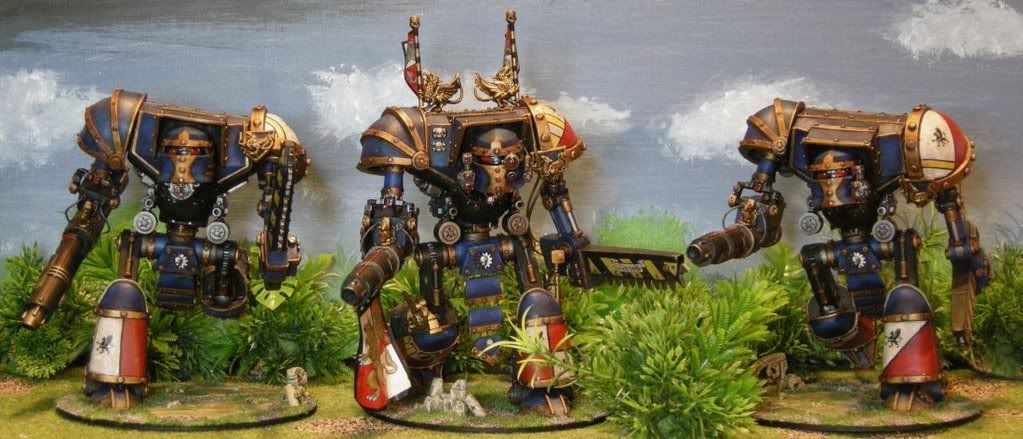
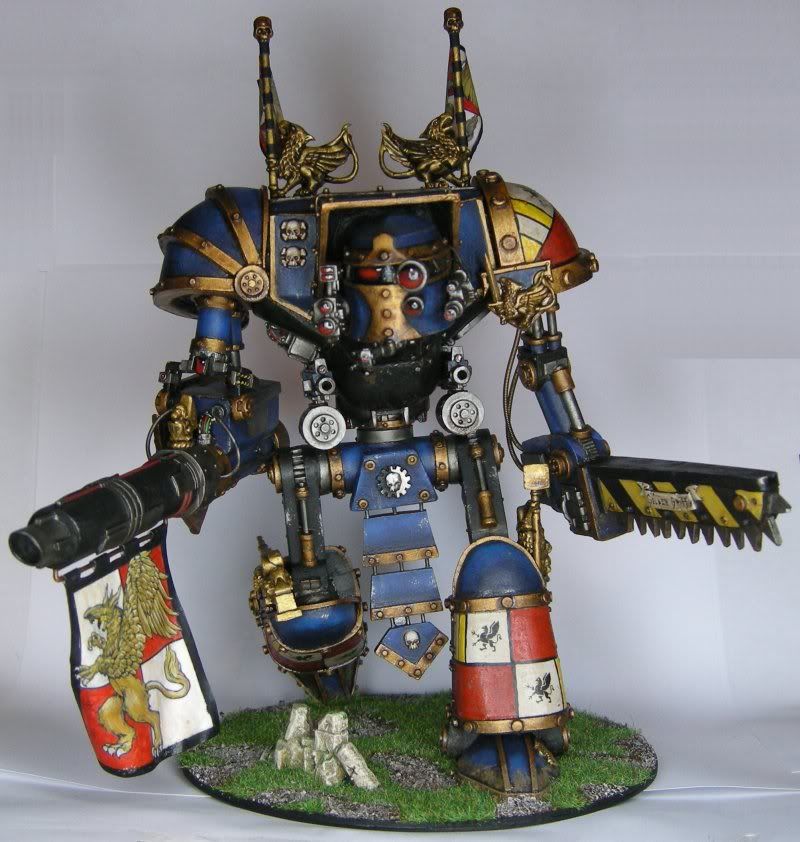
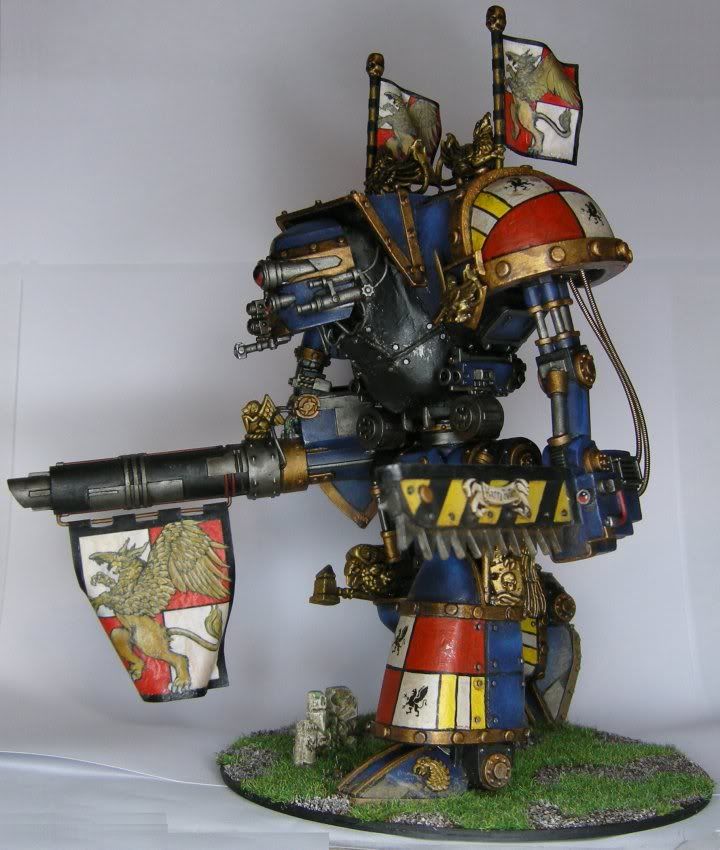
I got into the Guard because of Forge World. Specifically, I got the very original Leman Russ Conqueror kit (with the mail away coupon in Citadel Journal). I wanted to have a color scheme and someway to mark it, and thus the Saharrian XLV was born. A desire to pick up the Armorcast superheavies (which had just been discontinued, I’d actually gotten the Nids before they stopped producing, but got the tanks later) also led to further refinement of the XLV. I never figured I’d be a guard player, but slowly fell in love with them over the years. Now the Saharrian XLV is my biggest army over 30K in points) and I’ve added three more guard armies.
I’ve also added a pretty heafty Ordo Malleous force, two titan legion (Legio Astraman - the Morning Stars and Legio Victorum), and have a good sized SoB force sitting around waiting for paint.
3) Are you more into the modeling or the playing?
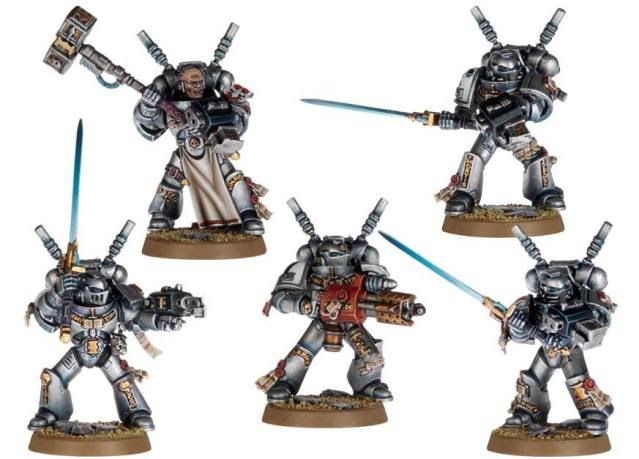
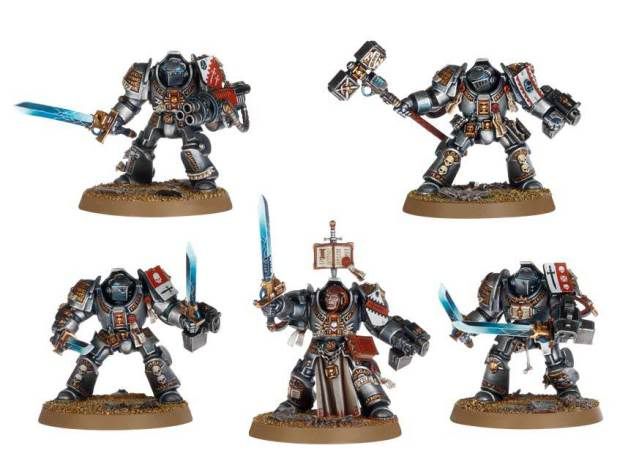
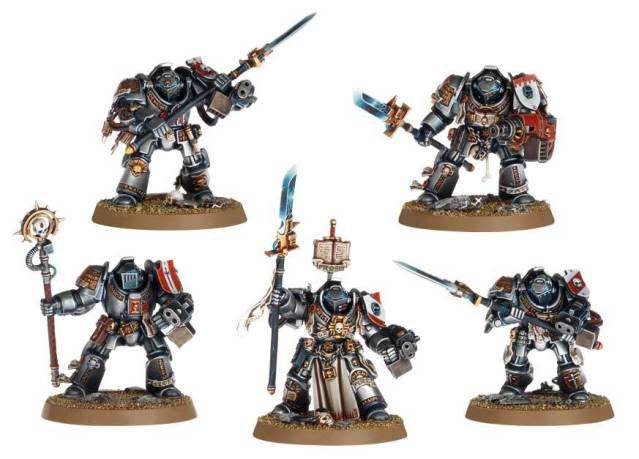
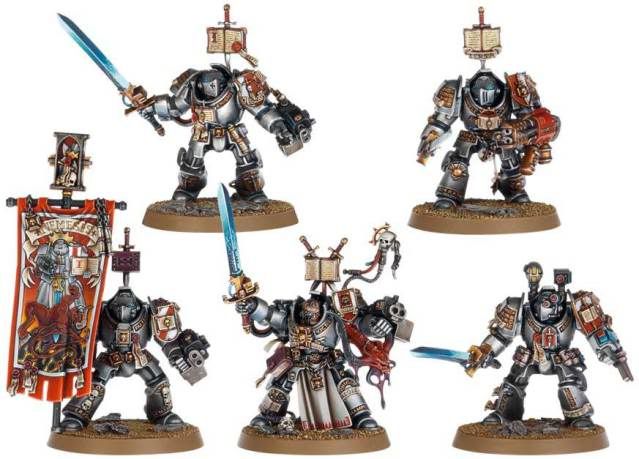
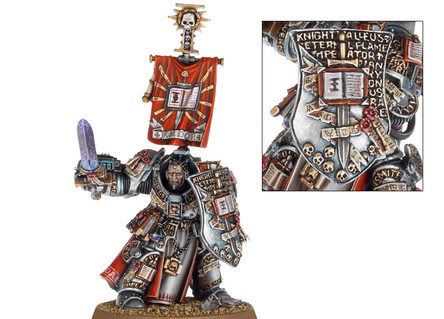
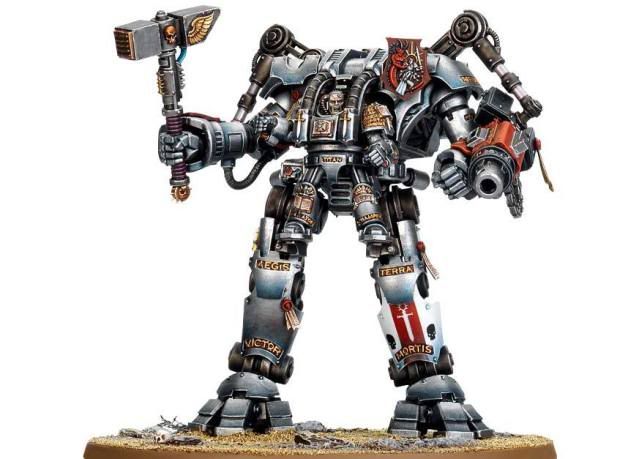
I’m more into the storytelling (fluff). I spend far more time writing history and background (and refining the army makeup) for my armies than I spend building them or playing with them. However, with that in mind I am definitely a modeler. At the same time, even with 10 years of playing, I’m still not what I would call an accomplished painter. Mostly because I don’t want to be. I’ve wanted my armies to stay consistent over the years and thus haven’t really changed techniques since when I started. This means my marines aren’t highlighted or shaded since I didn’t do those techniques ten years ago. Part of the reason I added new forces is to allow me to actually play a bit with painting more advanced techniques. My Grey Knights allowed me to actually use highlighting and shading and to do some real freehand work as well.
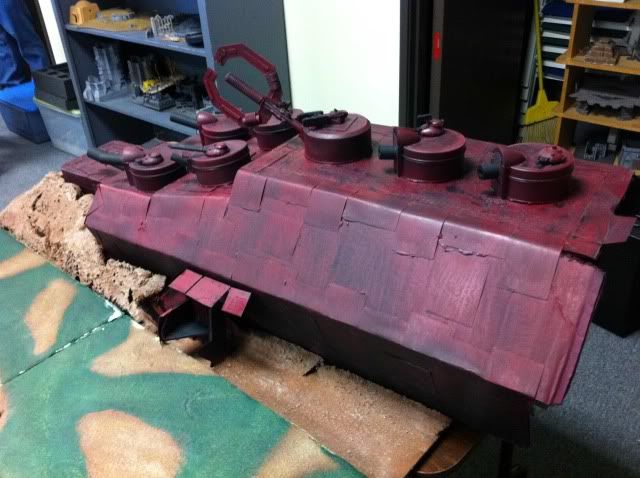
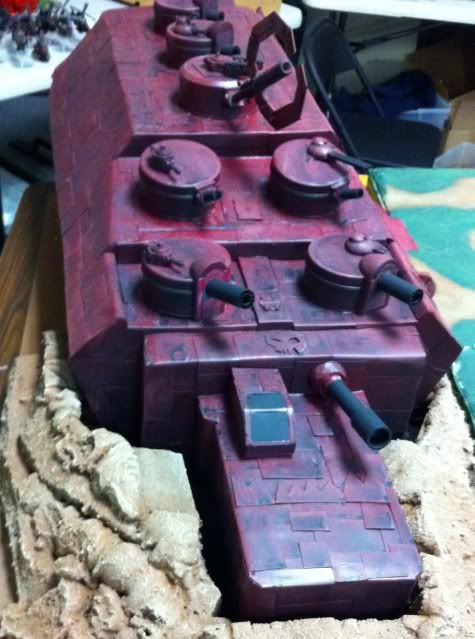
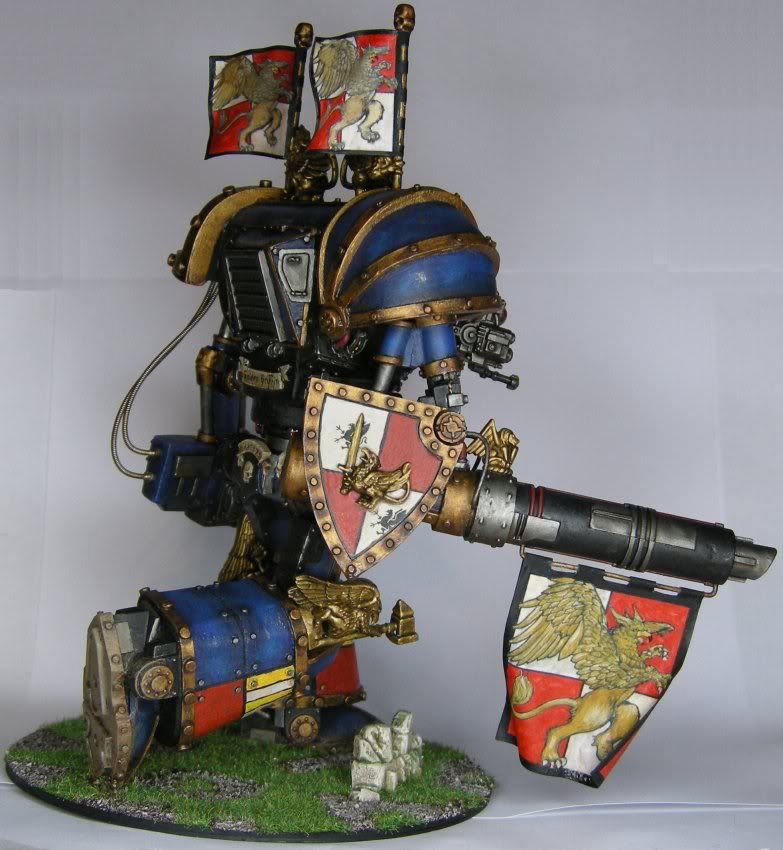
I do, however, consider myself to be a very good converter. I rarely truly scratchbuild anything, but my army is full of conversions all the way from simple part swaps, to reposing, to completely custom tank variants. Most of my scratchbuilding is confined to big models (such as my Leviathan, Imperialis, and titans).
4) How did Siegeworld Start?
I got started in large scale “mega-gaming” early. The first 40K event I ever organized was a two table game with 4 players where we each brought 2000 points. I’d also played in some fantasy mega battles probably 12-13 years ago now.
Basically, my hobby interests have always had me interested in megagaming because I don’t ever sell anything. Once its part of my army, it basically stays there, forever. I can count on one hand the number of models I’ve painted that I don’t still have and use. Thus, I always want to actually put all these models on a game table.
I consider the genesis of Siegeworld to actually be the third “Hjork.” If you’ve heard of Hjork, I’ll be impressed, but it was a floorhammer 40K game in New Hampshire. It was sort of loosely associated with Dakka Dakka (back when it was a club w/ a website as opposed to a website). I lived in Boston at the time and already liked to play big games, so I drove up carting around 8K in marines with me and a bunch of Forgeworld and Armorcast models (and the first units of the Saharrian XLV an Armorcast Shadowsword and Forgeworld Baneblade). This was the age of the VDR (and Imperial Armor - the Softcover), so we had rules written for all the nasty war machines and had a blast. The Hjork quietly died a few moths later without a further event, my understanding is due to internal disagreements between sponsors.
Meanwhile, I’d moved to Saint Louis and wanted to get a “Hjork” type event going in Saint Louis. I had gotten hooked up with Adeptus Basementus (or AB as it was commonly called) as a game club here in Saint Louis as it was founded. AB had a philosophy of fun gaming events. Tournaments were often part of it, but the point was to have fun. For example, at AB tournaments the last award given (and the most important) was sportsmanship.
AB’s philosophy took off and we had spun off a number of sister clubs (Adeptus Kansas City, Adepetus Windy City, Adeptus Twin Cities, and Adeptus Toronto to name a few) which were all consolidated on the AB website. The core of us in Saint Louis, having run some fairly major events here, were looking to do a major event to bring everyone together. A national event that could compete with Games Workshop’s Games Day while being organized by fans.
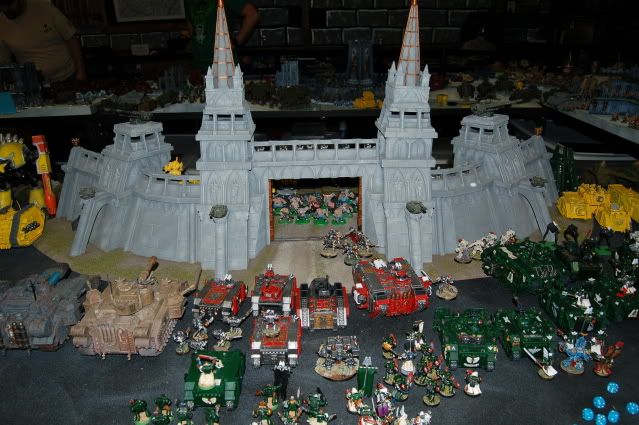
I decided to actually organize the floorhammer game I’d wanted to do while the other organizers looked to create a Convention type event with modeling workshops, tournaments, and other types of events that all the Adeptus clubs’ members could attend. The convention organizers found a cheaper venue in Chicago than they could get in Saint Louis (due to a familial connection and some help from our Chicago sister club and GW Chicago where AB’s club president now worked). Both events went forward, however, and both have been going on ever since. Siegeworld is still in Saint Louis doing mega games while the convention is also still in Chicago under the same name, a shortening of “The Adeptus Convention” -- “Adepticon.”
5) What is the purpose of Siegeworld?
Siegeworld has always been about being a showcase and simply having fun. A lot of aspects of “the hobby,” to use the words of Jervis, have their championships. Tournaments, obviously showcase the ability to build an effective army (and play it well) within certain predefined criteria. The Golden Daemon rewards outstanding painting and (to a lesser extent) modeling ability. Yet, I have always felt that these awards miss the point of “the hobby” as a whole. Slayer Sword winners often don’t play the game at all (or even have an army) and tournament players regularly denigrate requirements of painting or background as unimportant. I see “the hobby” as being something more immersive than those who are champions of these pieces will likely ever obtain.
Siegeworld is designed for the gamer who bleeds ultramarines blue and couldn’t imagine not playing their army simply because the codex is 10 years old (and horribly outclassed). This is the person who has named all their sergeants and have rolls of honor for them, even though the miniature is rarely used. It’s designed to be a showcase. I think it far less impressive to paint one hero to a standard to win the Slayer Sword, as it is to simply paint, by hand, 500 lesser troopers.
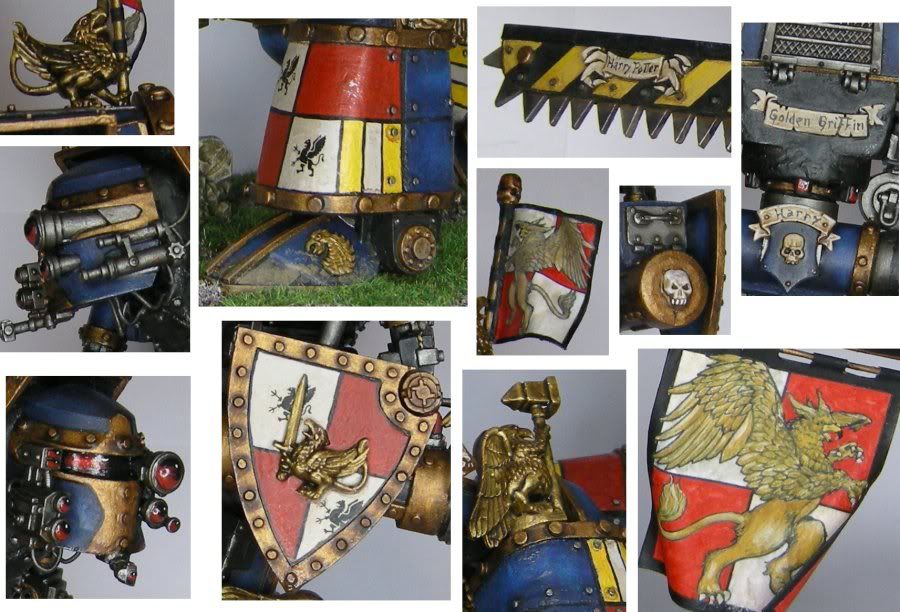
On thing Seigeworld is not is competitive. As is announced every year at the start of the game, this year’s Siegeworld will end in a draw.
10) What is the future of Apocalypse and what is the most glaring aspect that needs attention?
I think Apocalypse needs to become a part of “mainstream” 40K. Like Kill Team (or Cities of Death), it needs to have its main rules made part of the main rulebook. Right now, the problem is that the Apocalypse main rules are slowly falling out of date. With that there comes necessary rules interpretations and house rules. Basically, Apocalypse needs to become less of an alternative way to use 40K models, and simply “the official” rules for large games of 40K. As such it needs to be updated at the same time as all the other rules to make sure everything stays workable. That means the main rules in the main rulebook and data sheets in the codex (or everything in a living rulebook on the website) simply to make sure it stays current.
The biggest challenges in Apocalypse right now are threefold. One is simply dealing with the fact that the Apocalypse datasheets were often written prior to the current edition codex (and 5th ed. rules) and therefore refer to rules and units that simply don’t exist anymore. 90% of rules debates in Apocalypse games relate to how a rule that hasn’t been updated for changes to its parts should be handled in the current edition which is frustrating.
The second issue is STR D weapons. It was a good idea, but was simply made too good too fast. There needed to be another tier between STR 10 and STR D when the rules were first written and STR D really needed to be a pinnacle which very few models have. This oversight on GWs part (probably becuase they really geared Apoc for 40,000 point games, not 400,000 point games) meant that STR D weaponry has become a universal go-to for every purpose by players looking to play Apocalypse a little more competitively. This often makes players irrationally fear playing against titans and feel that Apocalypse isn’t fun. Alas, STR D is so entrenched now there may be no way to really deal with it (except house rules), but it is something that ideally needs to be addressed at the highest level of the rules.
The last issue is simply getting players to understand that Apocalypse is not tournament 40K. I’ve said that everything you need to know about playing in an Apocalypse game you can learn from watching the movie “Gladiator” because Apocalypse is the gladiator ring while tournament 40K is a WWI trench. In a tournament, tabling your opponent is good because it ensures a top level win. In Apocalypse, “a quick kill is boring.” Similarly, there is no honor in crippling your opponents by your “skill” before they ever enter the ring. Like in the movie, the audience doesn’t like it, it makes for a dull combat, and you often end up on the wrong side of your original allies. Finally, the purpose of the event is to please the crowd. Gladiators who have a bad day (read: thumbs down) are generally those that didn’t put on a good show. You can still have a good day (read: thumbs up) even if you lose the fight. Apocalypse is best when treated as what it is, a war game, not a war.